
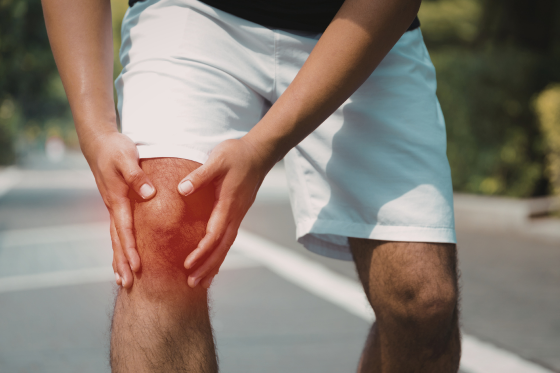
Knee pain has a way of interrupting life in small but persistent ways.
It shows up on the stairs.
During a workout.
On a long walk.
When standing up after sitting too long.
At first, it might feel minor — something to stretch or ignore.
But when it lingers, it starts to chip away at confidence.
Movements become cautious. Workouts become inconsistent. Plans become conditional.
And over time, the question quietly shifts from “Why does this hurt?” to “Can this actually improve?”
Here’s the reassuring truth:
Knee pain is common.
It is rarely random.
And in many cases, it is highly manageable.
Not with quick fixes.
But with clarity, structure, and progression.
The Knee Is a Middle Manager

The knee sits between two powerful joints — the hip and the ankle.
It bends and straightens. It absorbs force. It transfers load from the ground up through the body.
But unlike the hip, which is built for multi-directional mobility, the knee relies heavily on the joints above and below it to function smoothly.
If the ankle lacks mobility, the knee often compensates.
If the hip lacks strength, the knee absorbs extra load.
So when knee pain appears, the issue is not always the knee itself.
Often, it’s a capacity problem somewhere in the chain.
This isn’t about blame.
It’s about understanding the system.
Pain Does Not Automatically Equal Damage
One of the most powerful shifts in knee pain recovery is understanding how pain works.
Pain is an output of the nervous system. It is influenced by tissue sensitivity, stress levels, sleep quality, past experiences, and overall load.
Two people can have similar scans and very different symptom experiences.
That doesn’t make the pain imaginary.
It makes it complex.
When knee pain becomes persistent, the nervous system can become protective. Movements that once felt neutral now feel threatening.
The goal is not to silence the signal forcefully.
It is to reduce the need for protection.
That starts with restoring capacity.
The Avoidance Trap
When something hurts, avoiding it makes sense.
If stairs irritate the knee, stairs are minimized.
If squats feel uncomfortable, squats disappear.
Short-term relief can feel validating.
But long-term avoidance often leads to reduced strength and tolerance — which increases sensitivity when the movement returns.
The knee becomes less prepared, not more.
Instead of elimination, modification works better.
- Reduce depth.
- Reduce load.
- Slow tempo.
- Decrease volume.
Keep movement in the picture — just scaled appropriately.
Progress comes from exposure, not absence.
Strength Is Stability
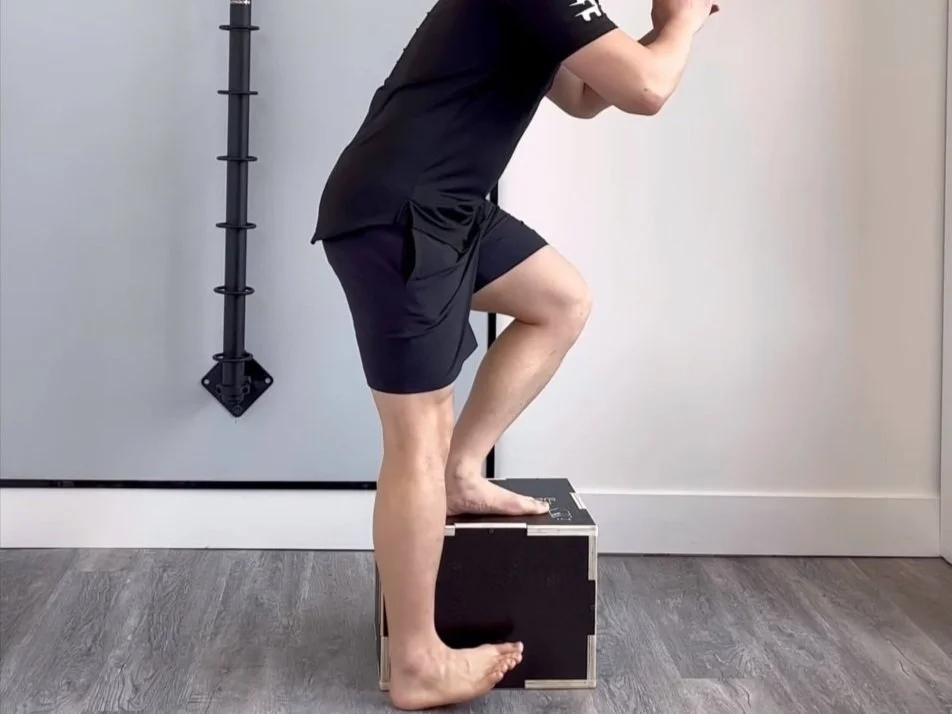
Strong muscles act as shock absorbers.
The quadriceps help control bending.
The hamstrings assist in stability.
The glutes influence alignment.
The calves manage impact.
When these muscles are underprepared, the knee often carries more stress than it should.
Strength training does not need to be aggressive. It needs to be progressive.
Early stages may include:
- Sit-to-stands
- Supported split squats
- Step-downs
- Isometric holds
- Calf raises
The goal is not exhaustion.
It is tolerance.
Small increases, repeated consistently, reshape capacity.
Load Management Matters More Than Intensity
Knee pain often flares not because of one bad movement — but because of cumulative overload.
A busy week.
Extra steps.
A new workout class.
Poor sleep.
Load stacks.
The body adapts well to gradual increases. It struggles with sudden spikes.
One helpful principle:
Increase either intensity or volume — not both at once.
For example:
- Add weight but keep repetitions stable.
- Increase walking distance but maintain pace.
Pacing builds durability.
Spikes create setbacks.
Mobility Supports Efficiency
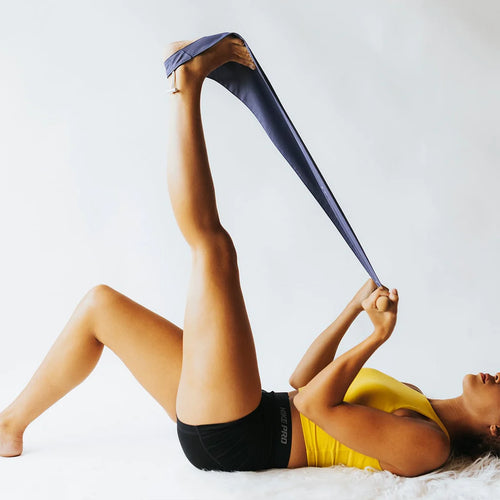
Mobility is often misunderstood as extreme stretching.
But for knee health, the goal is usable range — especially at the ankle and hip.
Limited ankle dorsiflexion can push extra force into the front of the knee.
Restricted hip rotation can alter tracking patterns.
Gentle, consistent mobility work paired with strength tends to be more effective than aggressive stretching alone.
Five to ten minutes daily often outperforms one long weekly session.
Mobility creates options.
Strength supports those options.
Flare-Ups Are Not Failure
This is important.
Progress with knee pain is rarely linear.
There may be weeks of steady improvement followed by a flare.
A flare-up does not erase progress. It provides feedback.
When symptoms increase, ask:
- Was there a spike in load?
- Was recovery reduced?
- Was sleep compromised?
- Did stress increase?
Adjust. Scale back slightly. Maintain movement at a tolerable level.
Then build again.
Resilience is built in cycles — not straight lines.
The Confidence Factor

Knee pain does more than affect tissue.
It affects confidence.
People begin second-guessing movement. Avoiding activities. Comparing current ability to past performance.
Rebuilding confidence is as important as rebuilding strength.
Confidence grows when:
- Movements are completed successfully.
- Flare-ups become manageable.
- Capacity increases measurably.
- Fear decreases gradually.
Each small win matters.
The nervous system learns safety through repetition.
Lifestyle Influences Knee Health
Sleep deprivation increases sensitivity.
Chronic stress elevates inflammation markers.
Prolonged sitting reduces circulation.
Knee pain is not isolated from the rest of life.
Improving:
- Sleep consistency
- Hydration
- Daily step count
- Stress regulation
can positively influence symptoms.
Small lifestyle shifts compound over time.
Redefining Success
Success is not necessarily being symptom-free 100% of the time.
Success is:
- Climbing stairs without hesitation.
- Returning to workouts confidently.
- Walking longer distances comfortably.
- Recovering faster after busy days.
It is about expanding participation.
When capacity grows, life feels bigger again.
A Sustainable Weekly Framework
A simple structure for rebuilding knee capacity might include:
2–3 Strength Sessions
Lower body focus with gradual progression.
2 Conditioning Sessions
Low-impact cardio to maintain circulation and endurance.
Daily Mobility (5–10 Minutes)
Ankles and hips prioritized.
At Least One Full Rest Day
Recovery is productive.
The aim is rhythm.
Consistency reduces unpredictability.
There Is Room for Progress
Knee pain can feel discouraging. But in many cases, it reflects a mismatch between demand and capacity — not permanent damage.
Capacity can be rebuilt.
Gradually.
Intentionally.
Supportively.
With structure, education, and patience, knees often become more resilient than expected.
The body is adaptable when given the right inputs.
Ready for the Next Step?
If knee pain has been limiting activity, creating uncertainty, or leading to repeated setbacks, structured guidance can make a meaningful difference.
A free Discovery Visit provides the opportunity to discuss symptoms, review movement patterns, and explore a clear, progressive plan tailored to current capacity.
Book a free DV today to begin rebuilding strength, restoring confidence, and moving toward more resilient knee health.