
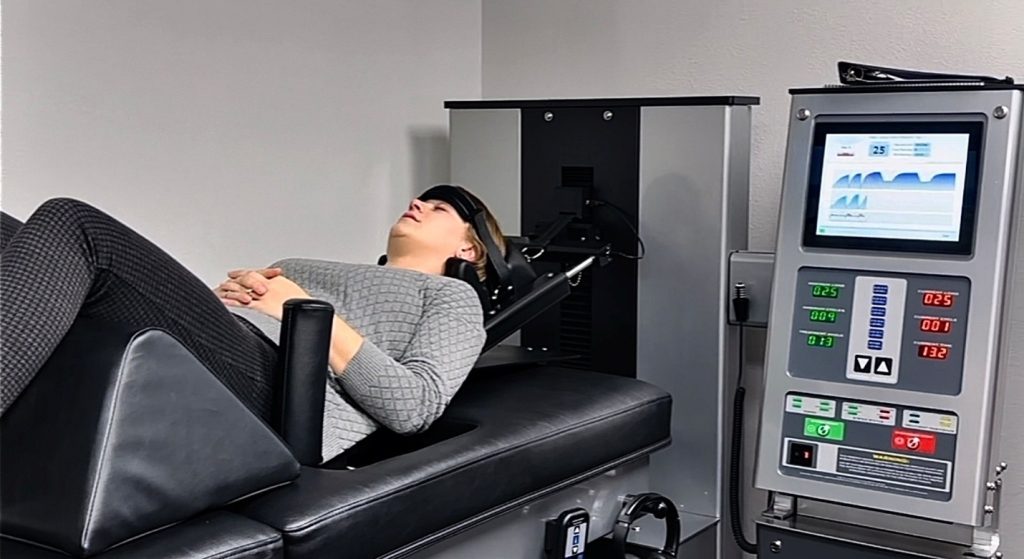
DRX9000 spinal decompression is a non-surgical, CE marked medical device that gently unloads the spine in a controlled way. It may help some people with disc-related back or neck pain reduce symptoms and improve function, especially when paired with exercise, education, and lifestyle changes. It is not a cure-all, and a physical therapist can help determine if it fits safely into your overall plan of care.
What Is the DRX9000?
The DRX9000 is a computerized spinal decompression system used by some physical therapists as part of conservative care for back and neck conditions. It is a CE marked medical device designed to apply controlled traction forces to the spine. The goal is to gently reduce pressure on intervertebral discs and nearby nerves while monitoring your comfort and response.
During DRX9000 spinal decompression, you lie comfortably on the table while a harness system applies a programmed pattern of pulling and relaxing. The machine adjusts force and timing based on your individualized settings. Sessions are usually combined with other physical therapy strategies such as movement training and strengthening.
Potential Benefits of DRX9000 Spinal Decompression
Evidence for non-surgical spinal decompression is still evolving, but many patients report meaningful improvements when it is used as part of a broader rehabilitation program. Research on low back pain in general shows that conservative care can reduce pain and improve function for many people. DRX9000 therapy is used with the following goals in mind:
Symptom Relief and Improved Function
- Decreasing back or neck pain related to disc problems
- Reducing radiating leg or arm symptoms such as tingling, numbness, or burning sensations
- Improving tolerance for standing, walking, or sitting
By gently unloading the spine, DRX9000 may help reduce mechanical irritation around sensitive tissues. This can make it easier to participate in active rehabilitation. Over time, this may translate into better day-to-day function.
Support for Disc and Nerve Health
Intervertebral discs are living tissues that respond to mechanical loading and unloading. Too much sustained compression can contribute to disc dehydration, stiffness, and reduced load tolerance. Spinal decompression therapy aims to create periods of reduced pressure that may support fluid exchange and tissue recovery.
While high-quality data specific to the DRX9000 are limited, some studies of non-surgical spinal decompression suggest improvements in pain and disability for certain patients. It is important to understand that results vary, and not all individuals experience the same level of benefit.
Complement to an Active Rehabilitation Plan
At Taylor Physical Therapy, DRX9000 spinal decompression is not used as a stand-alone solution. It is one tool within a comprehensive plan that also prioritizes:
- Targeted exercise and strengthening
- Mobility and flexibility work
- Posture, ergonomics, and load management education
- Gradual return to meaningful activities
The primary driver of long-term improvement in spine conditions remains consistent movement and load tolerance, not passive treatments alone. The DRX9000 is used to support movement, not replace it.
Conditions Where DRX9000 May Be Considered
Non-surgical spinal decompression with DRX9000 may be considered as part of a physical therapy plan for appropriately screened patients with:
- Lumbar or cervical disc herniation or protrusion
- Degenerative disc disease with mechanical back or neck pain
- Some forms of spinal stenosis-related symptoms
- Recurrent mechanical back or neck pain that has not fully responded to basic care
Not every person with these diagnoses is a good candidate, and some people are better served by other options. A thorough evaluation by a licensed physical therapist is essential before starting DRX9000 treatment.
What to Expect During a DRX9000 Session
Initial Assessment
Before any spinal decompression, your therapist will review your medical history, symptoms, goals, and any imaging that may be available. They will perform a detailed physical examination to assess movement, strength, nerve function, and symptom behavior. This helps determine whether DRX9000 is appropriate and safe.
The Treatment Setup
For lumbar decompression, you typically lie on your back with a padded harness around your pelvis and trunk. For cervical decompression, your head and neck are supported comfortably while a gentle traction force is applied. The DRX9000 is programmed with specific force levels, cycle times, and total session length based on your size, condition, and tolerance.
Most sessions last 20 to 45 minutes. You should feel a gentle stretching or pulling sensation, but not sharp, worsening, or alarming pain. You remain in communication with your therapist and can stop the session at any time if you feel uncomfortable.
After the Session
Some people feel looser and more comfortable right away. Others may notice gradual change over several sessions. Occasionally, mild soreness or fatigue occurs, similar to how you might feel after starting a new exercise routine. Your therapist will often follow decompression with movement drills or gentle exercise to reinforce improved mobility.
Who Might Benefit – and Who Should Avoid DRX9000
Possible Candidates
You may be considered for DRX9000 spinal decompression if you:
- Have disc-related back or neck pain confirmed or suspected by clinical examination
- Have tried basic self-care and simple exercises without enough relief
- Are seeking non-surgical options recommended by your healthcare team
- Can comfortably lie in the treatment position and communicate symptoms
A physical therapist will weigh these factors against your overall health, goals, and daily demands.
When DRX9000 May Not Be Appropriate
Spinal decompression is not suitable for everyone. It is generally not recommended for individuals with:
- Recent spine fractures
- Spinal tumors or active spinal infection
- Severe osteoporosis
- Spinal instability that has not been medically cleared
- Recent spinal surgery where motion is restricted by your surgeon
- Certain autoimmune, vascular, or systemic conditions where traction is unsafe
- Pregnancy, especially in later stages, for lumbar decompression
These are examples, not a complete list. Your therapist will coordinate with your broader healthcare team as needed to prioritize safety.
Tips to Get the Most From DRX9000 Treatment
Using DRX9000 spinal decompression as part of a structured physical therapy plan works best when you are an active participant. Consider the following strategies:
1. Stay Engaged With Your Exercise Program
Follow the home exercises and in-clinic strengthening program your therapist designs. Exercise helps build the strength and control needed to support your spine between sessions. Over time, this is what drives durable change in function.
2. Communicate Clearly About Your Symptoms
Tell your therapist how you feel before, during, and after each session. Changes in pain location, intensity, or quality help guide adjustments in decompression settings and exercise progressions. Good communication improves both safety and effectiveness.
3. Practice Good Posture and Load Management
Even the best treatment plan can be undermined by repeated, unmanageable stresses on your spine. Your therapist can coach you on:
- Sitting and standing strategies
- Safe lifting and bending patterns
- Activity pacing and breaks during repetitive tasks
These skills reduce the strain that contributes to recurrent flare-ups.
4. Support General Health Habits
Sleep quality, stress levels, and daily movement all influence how your body responds to care. Simple habits such as short walking breaks, gentle mobility routines, and regular sleep-wake times can complement spinal decompression therapy. If you are unsure where to start, your therapist can help you prioritize realistic changes.
5. Keep Expectations Realistic
DRX9000 is not an instant cure and does not guarantee that you will avoid surgery or other treatments. Some people notice clear benefits, others notice modest change, and some do not respond. Setting realistic goals with your therapist helps you judge progress over time rather than from a single session.
Evidence, Limitations, and How Physical Therapy Fits In
Current guidelines for low back pain emphasize non-invasive, conservative care that includes exercise, education, and manual therapy when appropriate. Non-surgical spinal decompression is one of several options and is typically considered when simpler measures have not provided enough relief.
Studies of decompression devices report improvements in pain and function in some patient groups, but many of these studies are small or have design limitations. High-quality research specifically on the DRX9000 is still limited, so clinicians apply it thoughtfully, based on clinical reasoning and patient preference.
At Taylor Physical Therapy, DRX9000 is used selectively and always in combination with active rehabilitation principles. The goal is to help you move more, not less, and to build long-term resilience rather than reliance on passive treatments.
The Bottom Line
DRX9000 spinal decompression can be a useful component of conservative care for certain disc-related spine problems when applied by trained professionals. It may help reduce pain, ease nerve-related symptoms, and improve tolerance for movement, especially when combined with exercise, education, and healthy lifestyle habits.
Because it is not appropriate for everyone and outcomes vary, the most important step is a thorough evaluation with a licensed physical therapist. Together, you can decide whether DRX9000 fits safely and sensibly into your overall plan for spine health.
Disclaimer
This information is for educational purposes only and is not a substitute for professional medical advice, diagnosis, or treatment. Always consult a qualified healthcare provider with questions about a medical condition or before starting any new treatment or exercise program.