

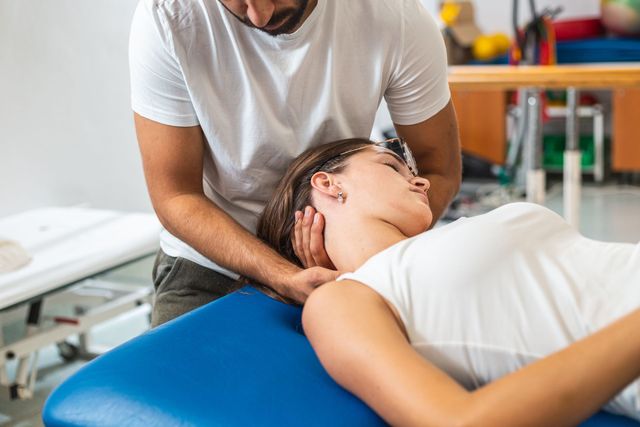
Neck and shoulder pain can influence nearly every aspect of daily life. Activities such as working at a desk, driving, exercising, or even sleeping may become more challenging when tension or irritation develops in this region.
Many individuals initially try common solutions such as rest, heat, massage, or general exercise routines. While these strategies can sometimes provide temporary relief, they may not always address the underlying cause of the problem.
At Taylor Physical Therapy, the focus is on identifying what is truly contributing to symptoms and creating a personalized plan that supports long-term movement and function.
Starting With a Detailed Evaluation For Your Neck and Shoulder Pain

Every treatment plan begins with a comprehensive evaluation.
Rather than focusing only on the area where symptoms are felt, the assessment explores how different structures may be contributing to the issue.
This may include evaluating:
- Cervical spine joints
- Intervertebral discs
- Nerve function
- Shoulder mobility
- Postural patterns
- Muscle coordination
By understanding how these elements interact, it becomes easier to identify the true source of irritation.
This approach allows treatment to be directed toward the structures that need the most support.
Hands-On Techniques to Restore Mobility
Many neck and shoulder issues involve restrictions in joint mobility or muscle tension.
Hands-on manual techniques are often used to help improve movement in these areas.
These techniques may focus on:
- Improving joint mobility
- Reducing muscular tension
- Encouraging natural movement patterns
- Supporting relaxation in surrounding tissues
Manual therapy is commonly combined with movement exercises to reinforce improved mobility.
Reducing Disc and Nerve Pressure
In some cases, symptoms may be influenced by pressure affecting discs or nearby nerves.
Techniques such as traction or unloading strategies can help reduce this pressure.
These approaches aim to:
- Create space between spinal structures
- Reduce irritation around nerves
- Support improved circulation in the affected area
When used appropriately, these techniques may help encourage more comfortable movement.
Supporting Tissue Recovery With Regenerative Tools

In addition to hands-on care, regenerative technologies can be used to support tissue recovery.
These may include:
- Red light therapy
- PEMF (pulsed electromagnetic field therapy)
- Other cellular-supporting tools
These technologies are designed to promote circulation and cellular activity within the tissues.
They are often used alongside manual therapy and movement exercises to support overall recovery.
Addressing Nerve Irritation and Trigger Points
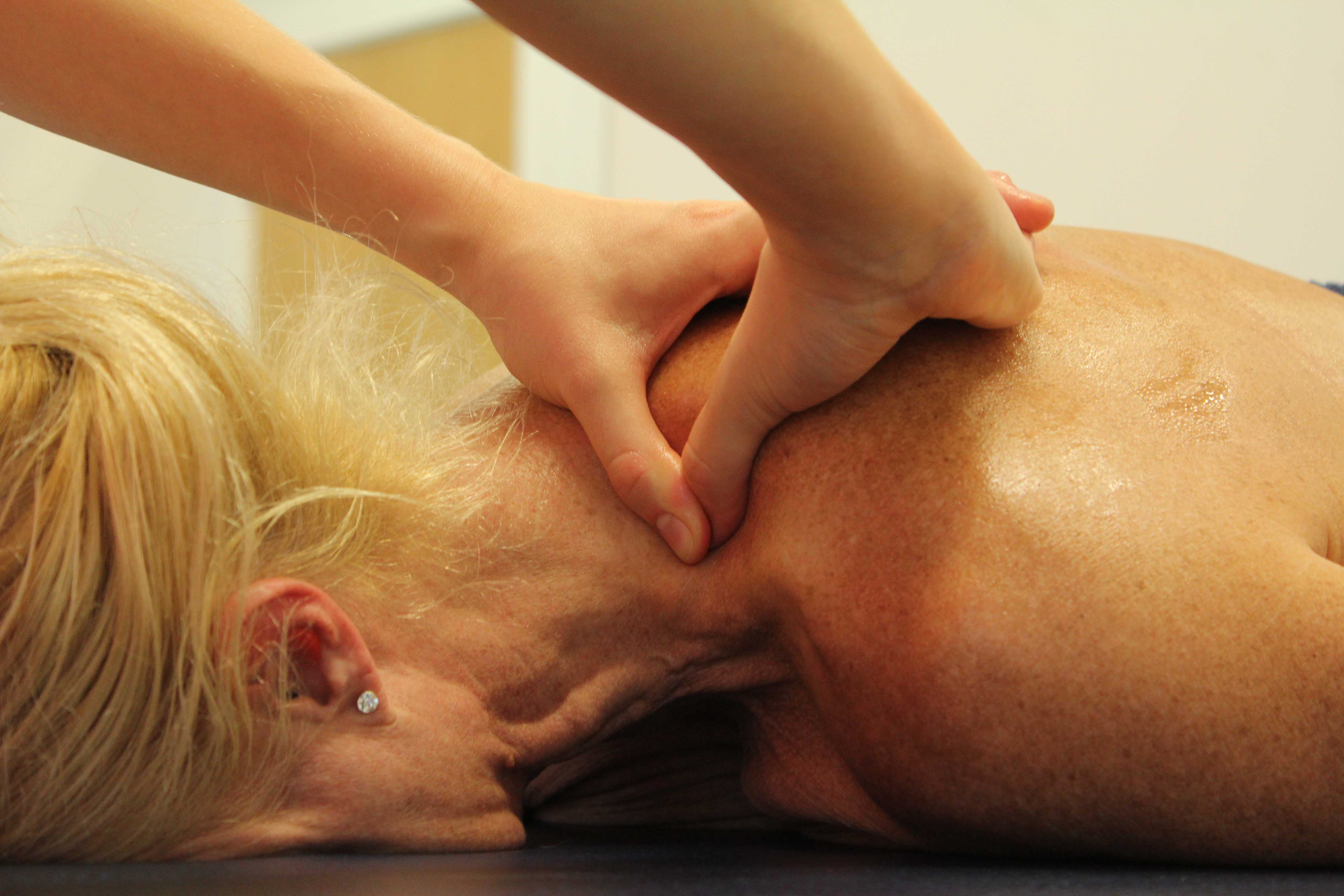
Certain symptoms, such as sensations traveling down the arm or persistent tightness around the shoulder blade region, may be linked to nerve irritation or trigger points.
Targeted therapies may help address these issues.
For example, tools such as Stimpod can be used to support nerve function and reduce irritation in sensitive areas.
Trigger point techniques may also help release tension in muscles that influence shoulder blade movement.
Supporting Everyday Movement For Neck and Shoulder Pain
Beyond clinical treatments, the ultimate goal is to help individuals move more comfortably in daily life.
This may involve improving movement patterns during activities such as:
- Driving
- Working at a desk
- Lifting or reaching
- Participating in exercise
- Spending time with family
By restoring mobility and strengthening supportive muscles, everyday movements can feel more natural and less restricted.
A Personalized Path Forward
Every individual’s experience with neck and shoulder discomfort is unique.
For this reason, treatment plans are tailored to each person’s specific needs and goals.
The focus remains on understanding the root cause of symptoms and supporting the body’s natural capacity for recovery through targeted therapies and movement.
With the right combination of evaluation, treatment, and supportive exercise, many individuals find it possible to return to activities that matter most to them.