
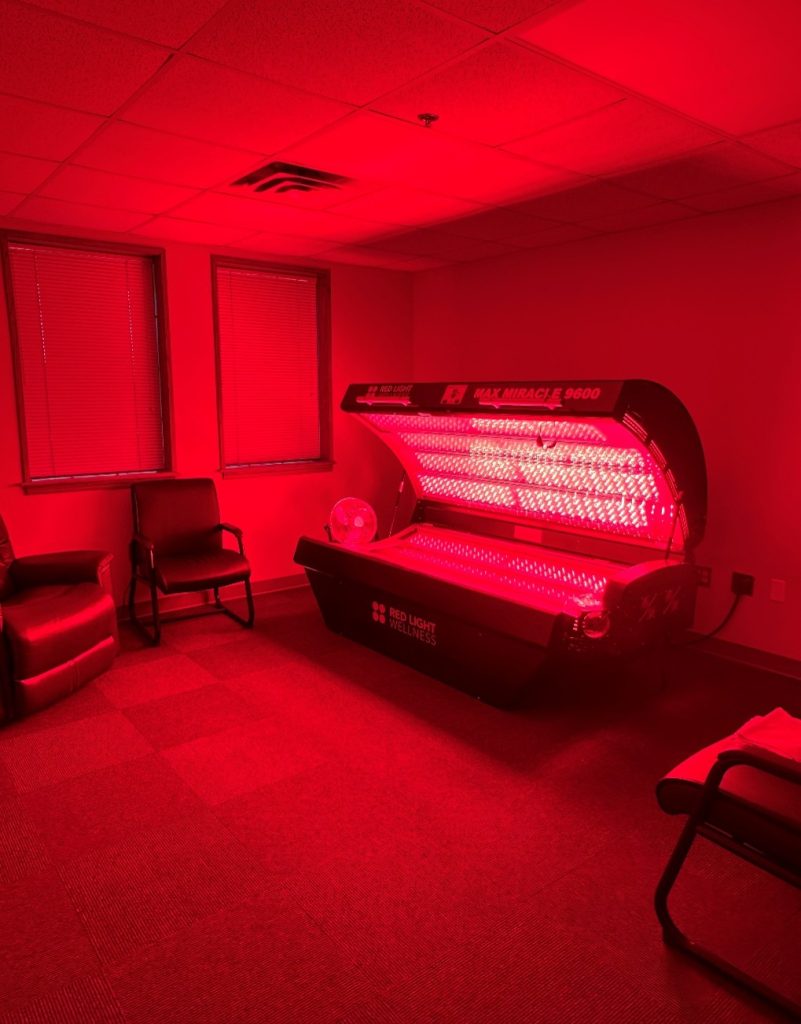
Red light therapy at TPT: Health & Wellness Hub in Oklahoma City is a non-invasive treatment that uses specific wavelengths of light to support cell function, reduce pain, and assist recovery when combined with a broader rehabilitation plan. Research is growing and promising, especially for joint pain, muscle recovery, wound healing, and some skin conditions, but it is not an instant cure, and results vary.
What is red light therapy?
Red light therapy, sometimes called low-level light therapy or photobiomodulation, uses low-energy red and near-infrared light to influence how cells function. It is delivered using specialized lamps, panels, or handheld devices applied close to the skin. At Taylor Physical Therapy: Health & Wellness Hub, it’s used as one tool alongside exercise, manual therapy, and other physiotherapy interventions.
Unlike surgical lasers that cut or burn tissue, red light therapy devices use lower intensities that do not heat or damage the skin. The goal is to gently stimulate natural repair processes.
How does red light therapy work?
Current science suggests that specific wavelengths of red and near infrared light are absorbed by structures inside your cells, particularly in the mitochondria. These are often called the “powerhouses” of the cell. When they absorb light, they may produce energy more efficiently and change the way the cell signals and responds.
Research points to several possible effects:
- Increased cellular energy production
- Modulation of oxidative stress
- Reduced inflammatory signaling
- Improved blood flow in the treated area
These changes can support tissue repair and may reduce pain in some conditions. However, responses differ from person to person and from one body region to another.
Potential benefits of red light therapy
Evidence for red light therapy is strongest in a few key areas. It is important to remember that most studies look at it as an adjunct, not a standalone cure.
Pain and joint stiffness
Several studies suggest red light therapy can help reduce pain and stiffness in conditions like osteoarthritis and chronic joint pain when used with exercise and other care. By influencing inflammatory mediators and circulation, it may make movement more comfortable. This can allow you to participate more fully in rehabilitative exercises prescribed by your physical therapist.
Muscle recovery and performance
Red and near infrared light may support muscle recovery after exercise or injury. Some research shows reduced delayed onset muscle soreness and faster return of strength following treatment. For active patients, this can be useful during structured rehab programs or graded return to sport.
Skin health and scarring
Because red light can affect cells in the skin, it has been studied for wound healing, scar management, and some skin conditions. Research suggests it may support collagen production and microcirculation. In a physiotherapy setting, this is most relevant for post surgical scars or soft tissue injuries where improved tissue quality is a goal.
Wound healing and inflammation
Photobiomodulation has been investigated for chronic wounds, tendon problems, and inflamed soft tissues. Studies report improvements in tissue repair speed and pain in certain cases, especially when combined with appropriate loading and movement strategies. Physical therapists may use red light therapy to complement manual therapy and exercise targeting the same area.
Mood and sleep (early evidence)
Some early research explores red and near infrared light effects on mood and sleep, especially when applied near the head or in whole body systems. So far, findings are mixed, and protocols vary widely. At Taylor Physical Therapy, any potential mood or sleep benefits are considered secondary, while the primary focus is on musculoskeletal health and function.
Is red light therapy safe?
Red light therapy is generally considered low risk when delivered properly. Unlike tanning beds or high-power lasers, treatment uses non-ionizing, low-level light that does not tan or burn the skin when used in recommended doses.
Common experiences during treatment at TPT: Health & Wellness Hub in Oklahoma City include:
- A gentle warmth or mild tingling
- Temporary redness in the treated area
- Relaxation or a sense of calm for some people
More significant side effects are rare but can include irritation of very sensitive skin or temporary worsening of symptoms if the dose is too high. This is one reason dosing and treatment parameters are best managed by trained clinicians.
Who should be cautious or talk with a provider first?
Red light therapy is not appropriate for everyone. You should speak with a qualified clinician before using it if you:
- Are you pregnant or breastfeeding
- Have a history of skin cancer or active cancer in the treatment area
- Take medications that increase light sensitivity
- Have known eye conditions sensitive to light
- Have uncontrolled medical conditions
Protective eyewear is recommended when devices are used near the face or eyes
What to expect from red light therapy at TPT: Health & Wellness Hub in Oklahoma City
In our clinic, red light therapy is one part of a comprehensive, movement-focused care plan. It is not used as a standalone solution, but as a tool to help you move with less pain and participate more fully in active rehabilitation. To learn more about how we integrate this modality at TPT: Health & Wellness Hub in Oklahoma City with other services, visit our page on (Click Here->) red light therapy.
How many sessions are usually needed?
There is no single protocol that fits everyone. Studies often use multiple sessions per week over several weeks, especially for chronic pain or long-standing conditions.
Your physical therapist will consider:
- Your diagnosis and current symptoms
- How you respond to initial treatments
- Your schedule and rehabilitation goals
They may recommend a trial of several sessions while monitoring changes in pain, function, and activity tolerance. If you do not notice a meaningful benefit, your plan can be adjusted.
Frequently Asked Questions about Red Light Therapy
Does red light therapy hurt?
Most people feel no pain during treatment. You may notice mild warmth or a gentle tingling in the area being treated, but this should not be uncomfortable. If anything feels too warm or irritating, the device can be repositioned or the dose adjusted.
Will I feel results right away?
Some patients report short-term pain relief or ease of movement after a session. For others, changes are more gradual and are best measured over several weeks alongside exercise and activity progress. Red light therapy is not an instant cure, and expectations should be realistic.
Can I replace exercise with red light therapy?
No. For most musculoskeletal conditions, movement and progressive loading are the most important drivers of long-term improvement. Red light therapy is used to support these efforts, not to replace strengthening, mobility work, or lifestyle changes.
When might red light therapy be considered?
Your physical therapist may discuss red light therapy as an option if you have:
- Persistent joint or soft tissue pain limiting your participation in exercise
- Postoperative pain or stiffness as you start rehabilitation
- Muscle soreness that is slowing your progress
- Scars or soft tissue changes after injury or surgery that affect movement
The decision to include it will be individualized. The focus remains on safe, progressive improvement in your daily activities, work, and sports.
Next steps
If you would like to explore whether red light therapy might fit into your treatment plan, schedule a one-on-one Discovery Visit at TPT: Health & Wellness Hub in Oklahoma City (Click Here->) red light therapy page. We can help determine if this modality is appropriate for your condition and how it might be combined with other evidence-based care.
For more information or to schedule a visit, call the clinic at 405-286-1170 or visit our (Click Here->) red light therapy page.
Disclaimer: This article is for information only and is not a substitute for professional medical advice, diagnosis, or treatment. Always consult a qualified health professional about your specific situation.